
Pet Dentistry in Bethalto, IL | Bethalto Animal Clinic
Helping Dogs and Cats Maintain Healthy Smiles
Most people brush their teeth every day without thinking twice about it. But how often do you brush your dog’s or cat’s teeth?
How often do you brush your teeth? Now, how often do you brush your pet’s teeth?
Dental disease is one of the most common health problems we see in dogs and cats, and it can lead to pain, infection, difficulty eating, and other health concerns if left untreated. At Bethalto Animal Clinic, our veterinary team provides dental cleanings, digital dental X-rays, periodontal disease treatment, tooth extractions, and oral surgery to help protect your pet’s oral and overall health.
During every wellness exam, we evaluate your pet’s teeth and gums and discuss any concerns we find. Whether your pet needs preventive dental care or treatment for advanced dental disease, we’re here to help keep them comfortable and smiling.
Why Pet Dental Care Is So Important
Many pet owners assume bad breath is just part of having a dog or cat. In reality, persistent bad breath is often one of the earliest signs of dental disease.
Dental disease affects more than the teeth and gums. Bacteria associated with oral infections can enter the bloodstream and impact other areas of the body. Untreated dental problems may contribute to:
- Chronic pain and discomfort
- Difficulty chewing food
- Tooth root abscesses
- Tooth loss
- Jawbone damage
- Kidney infections
- Heart valve infections
- Reduced quality of life
Dogs and cats are naturally skilled at hiding pain. Many continue eating and behaving normally even when significant dental disease is present. That’s one reason regular veterinary checkups and oral health evaluations are so valuable.
Dental Disease Grading at Every Exam
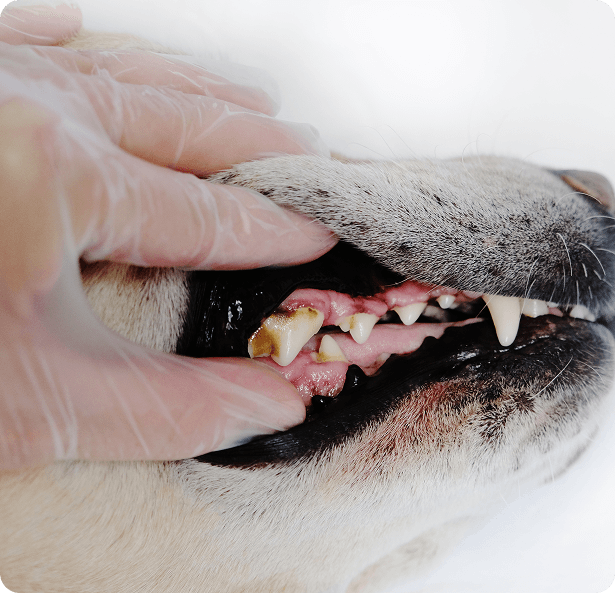
At Bethalto Animal Clinic, our veterinarian evaluates your pet’s oral health during routine examinations and assigns a dental grade from 1 to 4.
- Grade 1
Little to no plaque, tartar, or gum disease. - Grade 2
Early tartar buildup and mild gingivitis (gum inflammation). - Grade 3
Moderate periodontal disease with increased tartar accumulation and gum changes. - Grade 4
Severe tartar buildup, advanced periodontal disease, infection, and significant oral discomfort.
This grading system helps us monitor your pet’s oral health over time and determine when treatment may be needed.
Professional Dental Cleanings for Dogs and Cats
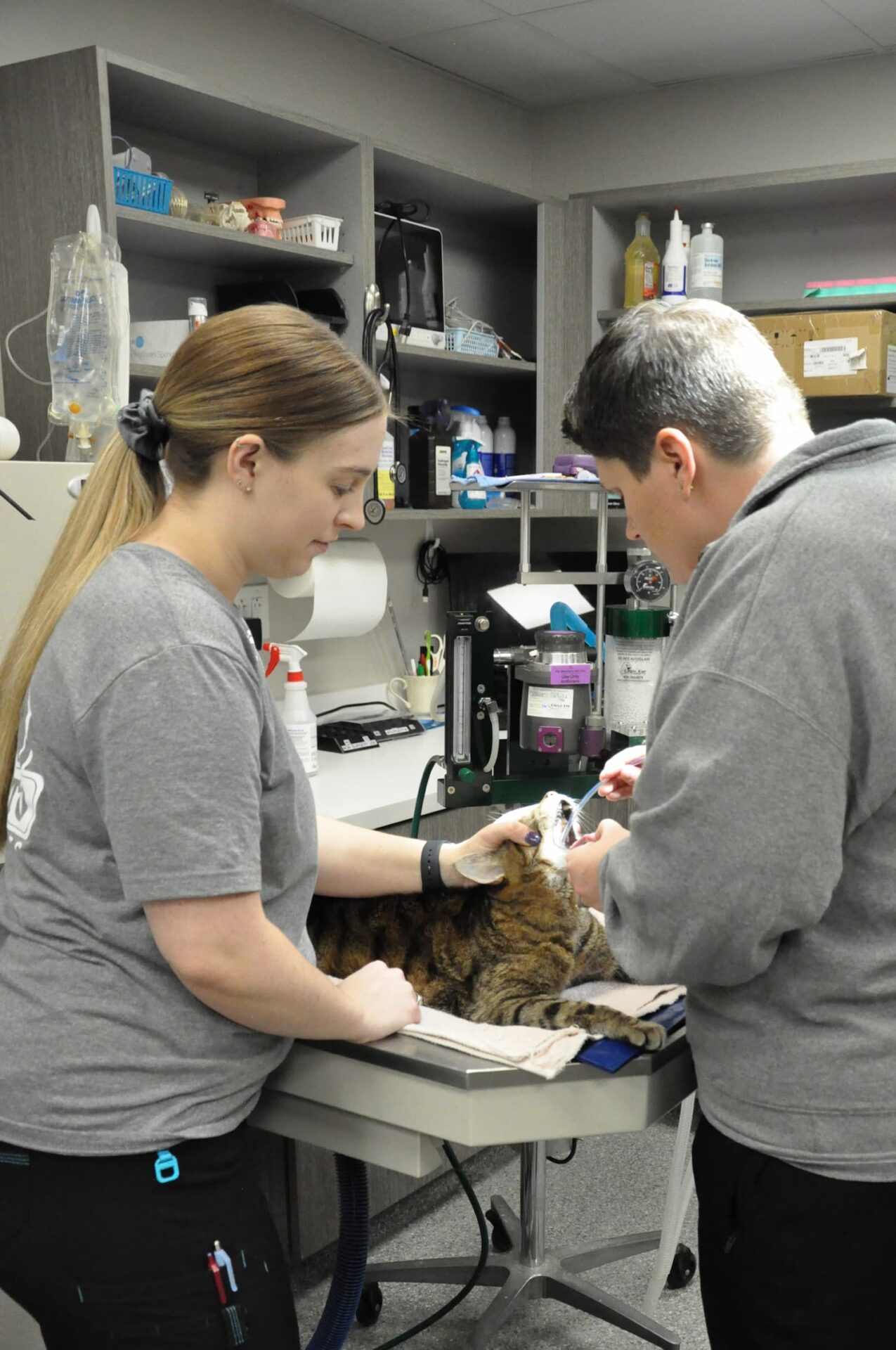
Even with regular brushing, plaque and tartar can build up in areas that are difficult to reach. Professional dental cleanings allow our veterinary team to remove this buildup above and below the gumline, where many dental problems begin. During the procedure, your pet’s teeth are scaled and polished to support better oral health.
General anesthesia allows our veterinarian to safely examine every tooth, take dental X-rays, and provide any necessary treatment while keeping your pet comfortable.
Digital Dental X-Rays Help Us See More
Much of a tooth lies beneath the gumline and cannot be evaluated during a visual examination alone.
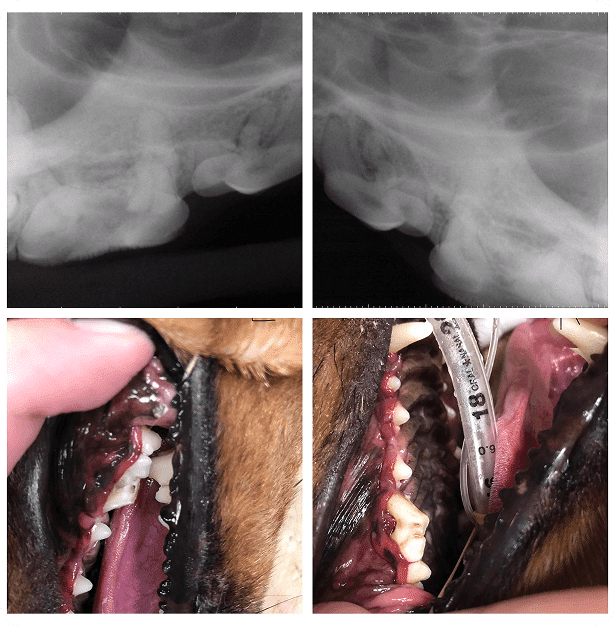
That’s why we use digital dental radiographs (dental X-rays) as part of many dental procedures. Dental X-rays allow our veterinarian to examine:
- Tooth roots
- Bone surrounding the teeth
- Hidden infections
- Fractured teeth
- Bone loss
- Tooth resorption
- Abscesses and other abnormalities
In many cases, dental X-rays reveal problems that would otherwise go undetected. They help us make informed treatment recommendations and provide better care for your pet.
Gingivitis and Periodontal Disease Treatment
Periodontal disease (gum disease) is a progressive condition that becomes more serious without treatment.
Common signs include:
- Bad breath
- Red or swollen gums
- Bleeding gums
- Yellow or brown tartar buildup
- Difficulty chewing
- Dropping food while eating
- Pawing at the mouth
- Decreased appetite
Treatment recommendations depend on the severity of disease. Some pets benefit from routine dental cleaning and improved home care, while others may require more advanced periodontal treatment or tooth extraction.
The goal is to reduce pain, eliminate infection, and help preserve healthy teeth whenever possible.
Tooth Extractions and Oral Surgery
Sometimes a damaged or infected tooth cannot be saved.
When a tooth causes ongoing pain, infection, or significant damage, extraction may be the best option for improving your pet’s comfort and health. While many owners worry about tooth extractions, pets often feel much better once painful teeth have been removed.
Our veterinarian also performs oral surgery procedures, including oral mass removal and biopsy services when needed. Evaluating abnormal growths early helps us determine the most appropriate next steps for treatment.
Home Dental Care Between Professional Cleanings
Professional dental care is important, but daily home care can make a tremendous difference.
We recommend:
- Daily tooth brushing whenever possible
- Veterinary-approved dental products
- Dental diets when appropriate
- Regular oral health evaluations
- Routine wellness examinations
Our veterinary team can demonstrate brushing techniques and recommend products that have proven oral health benefits for dogs and cats.
Why Choose Bethalto Animal Clinic for Pet Dentistry?
For nearly 50 years, Bethalto Animal Clinic has been rooted in this community and built on generations of relationships with local families. Many of the pets we care for today belong to the children and grandchildren of some of our earliest clients.
Families choose our practice because they appreciate:
- Independent, privately owned veterinary care
- Compassionate, personalized treatment plans
- Honest pricing and recommendations
- Advanced dental diagnostics, including digital dental X-rays
- Experienced dental and oral surgery services
- A high standard of care focused on your pet’s comfort and well-being
We proudly serve pets and families throughout Bethalto, Wood River, East Alton, Alton, Edwardsville, Bunker Hill, Roxana, and surrounding Madison County communities.
Don't Wait for Dental Disease to Progress | Call Us Today!
Healthy teeth and gums play an important role in your pet’s overall health. Regular dental evaluations and professional cleanings can help prevent painful dental disease and improve your pet’s quality of life.
If your dog or cat has bad breath, visible tartar, red gums, or is due for a dental evaluation, contact Bethalto Animal Clinic today.
Call (618) 377-2139 to schedule an appointment and learn more about our pet dentistry services in Bethalto, IL.
• FAQs
Helpful Information for Pet Owners
Frequently Asked Questions about
Dentistry
How often should my pet have a dental cleaning?
Every pet is different. Some dogs and cats may need professional dental cleanings annually, while others require more frequent care. During routine exams, our veterinarian evaluates your pet’s oral health and recommends a schedule based on their needs.
Is anesthesia necessary for pet dental cleanings?
Yes. General anesthesia allows us to safely clean below the gumline, perform a complete oral examination, take dental X-rays, and provide treatment without causing stress or discomfort.
What are signs that my pet may have dental disease?
Common signs include bad breath, tartar buildup, red gums, difficulty chewing, dropping food, excessive drooling, pawing at the mouth, and decreased appetite.
Why are dental X-rays important?
Dental X-rays help us identify problems below the gumline, including damaged roots, hidden infections, bone loss, and fractured teeth that cannot be seen during a visual examination.
Can brushing my pet’s teeth really help?
Absolutely. Daily brushing is one of the most effective ways to reduce plaque buildup and support long-term oral health. Our veterinary team can recommend safe products and techniques for your pet.